Zigbee and Bluetooth are two common wireless communication technologies.
They differ in many aspects and are applicable in different scenarios. The following is an analysis of their main differences and applicable situations:

1. Technical features
- Zigbee
Based on the IEEE 802.15.4 standard, it adopts a mesh network topology, supports a large number of device connections (theoretically up to 65,000 nodes), and has a wide network coverage (about 100 meters in open areas).
The data transmission rate is relatively low (20-250 kbps), but the power consumption is extremely low, making it suitable for long-term operation of battery-powered devices.
It has self-organizing and self-healing capabilities, strong network stability, and is often used in scenarios with high reliability requirements such as smart homes and industrial automation.
- Bluetooth
It is mainly used for short-range point-to-point communication (such as between mobile phones and headphones), with a relatively high data transmission rate (up to 2 Mbps for Bluetooth 5), and is suitable for the rapid transmission of small data packets.
The network coverage is limited (about 150 meters in open areas), and the number of nodes is small (traditional Bluetooth has a maximum of 8 nodes, while Bluetooth Mesh has approximately 32,000 nodes).
It has relatively high power consumption but low hardware cost, and is widely used in consumer electronic products (such as smartwatches and beacons).
2. Application scenarios
- Zigbee
It is suitable for building large-scale and high-density Internet of Things networks, such as smart home systems (lighting, sensor linkage), industrial automation (equipment monitoring), and smart cities (street lamp control).
The gateway device needs to be connected to the Internet, and the device must support the Zigbee protocol.
- Bluetooth
It is suitable for quick connection between personal devices, such as data synchronization between mobile phones and headphones, and between smart bracelets and mobile phones.
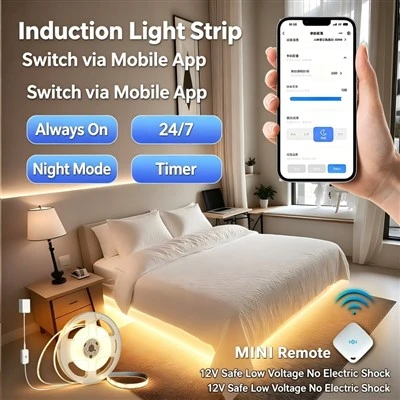
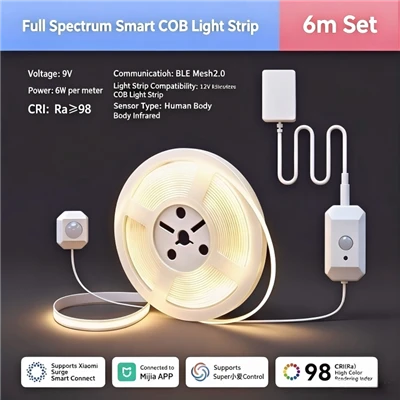
Bluetooth Mesh can be used in small smart home scenarios (such as local lighting control), but it may face latency and bandwidth limitations when deployed on a large scale.
3. Advantages and Disadvantages
- Zigbee
Advantages: High network stability, large node capacity, and low power consumption.
Disadvantages: Complex configuration, requires gateway support, and slow data transmission speed.
- Bluetooth
Advantages: High hardware popularity, low development cost, and fast data transmission.
Disadvantages: Small network coverage, limited number of nodes, and high power consumption.
4. Select suggestions
- Choose Zigbee first
Large-scale device interconnection is required (such as whole-house smart home and industrial production line monitoring).
It has extremely high requirements for network stability, and the equipment needs to operate at low power consumption for a long time.
- Choose Bluetooth first
Rapid data transmission is required (such as real-time health monitoring equipment).
The equipment needs to interact directly with consumer electronic products such as mobile phones and is sensitive to cost.

Summary:
There is no absolute superiority or inferiority between the two. The choice should be based on specific needs. Zigbee is suitable for building stable and large-scale Internet of Things networks. Bluetooth is more suitable for personal device scenarios that require short-distance and fast data transmission.