I. What is Bluetooth Mesh? A vivid metaphor
Imagine in a large office, a traditional Bluetooth connection is like an employee having to run up to the manager to report work (point-to-point connection). If the manager is not within the scope, communication cannot take place.
And Bluetooth Mesh (Mesh Network) is like an efficient team network. Each employee (device) can communicate directly with any colleague within the radio range. More importantly, they can pass on the information station by station and eventually deliver it to the target employees far away at the other end. Even if several people in the middle are not at their seats, the information can still be reliably delivered through other channels.
Technical definition: Bluetooth Mesh is a network topology that enables many-to-many communication between devices that support Bluetooth Low Energy (BLE). Every device in the network (referred to as a node) can receive, send and forward information, jointly building a large, stable and extremely wide-coverage communication network.

Ii. Significant Advantages of Bluetooth Mesh
Why has Bluetooth Mesh become a popular technology in the field of the Internet of Things? Because it has solved many pain points of traditional wireless connections.
Large-scale equipment connection
Advantage: Traditional Bluetooth usually can only connect a small number of devices (such as a mobile phone connected to seven headphones). Theoretically, Bluetooth Mesh can connect over 65,000 nodes, easily handling large-scale scenarios such as smart buildings and factory sensor networks.
Strong coverage and stability
Advantage: The network coverage no longer depends on the signal strength of a single device. Information can be "relayed" through multiple nodes in the network, penetrating walls and obstacles, and easily covering the entire home, office building or factory workshop. This multi-path transmission mechanism also greatly enhances the reliability of the network. Even if a certain node fails, the information can automatically choose another path for delivery.
High scalability and self-healing capability
Advantage: Adding a new device is very simple - just connect it to the network, and it will automatically become part of the network. The network structure is dynamic, capable of automatically discovering the optimal communication path and self-repairing when nodes fail or move, ensuring that the network remains robust at all times.
Low-power design (for some devices)
Advantage: Devices in a Bluetooth Mesh network can play different roles. For instance, sensors can be designed as low-power nodes, remaining in a sleep state for most of the time and only sending information when necessary. Devices powered by the municipal electricity (such as lights and sockets) can act as friend nodes and relay nodes, responsible for forwarding information and providing power for the entire network. This division of labor has achieved energy efficiency optimization of the entire network.

Iii. Challenges and Limitations to Be Considered
No technology is perfect. Bluetooth Mesh also has some aspects that need attention:
A certain communication delay
Limitation: As the information is forwarded "station by station" rather than sent directly, it will cause a certain degree of delay compared with point-to-point communication. This might be a factor to be considered in applications with extremely high real-time requirements, such as some high-speed industrial controls.
The complexity of the network increases
Limitation: Managing a network composed of thousands of nodes is more complex than managing simple point-to-point connections. This requires more meticulous design in firmware development and network planning.
The balance between security and power consumption
Limitation: Strong security is the core design of Bluetooth Mesh, and every communication is encrypted. However, frequently receiving, decrypting, encrypting and forwarding messages will consume more energy. Therefore, the relay function is usually carried out by equipment powered by the municipal power supply, and battery equipment should be avoided as much as possible to serve as a relay.
Iv. Typical Application Scenarios of Bluetooth Mesh
This technology is empowering various industries:
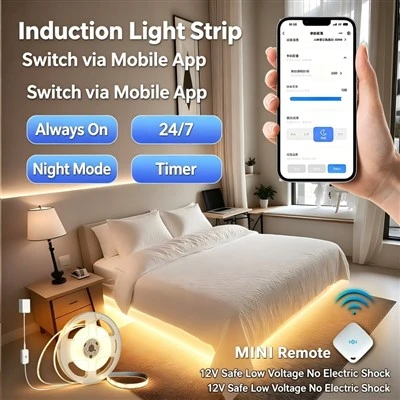
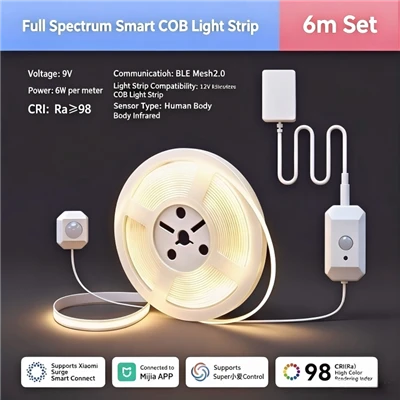
Business and smart home lighting: This is the most classic application. Control the lights of the entire floor via your mobile phone or switch, and achieve complex group and scene control.
Asset tracking and management: In warehouses, hospitals and factories, attaching Bluetooth Mesh tags to important assets enables real-time location tracking.
The Industrial Internet of Things (IIoT) collects sensor data (such as temperature, humidity, and vibration) from the entire factory to build a reliable monitoring network.
Intelligent building automation: Controlling air conditioners, curtains, security sensors, etc., to create efficient and energy-saving smart buildings.
V. Conclusion: Choose the future for your products
Bluetooth Mesh networking is not merely a technological upgrade; it represents a shift in mindset - from individual devices to a collaborative ecosystem of devices. With its large-scale connectivity, wide-area coverage and high reliability, it has become one of the ideal choices for building large-scale Internet of Things applications.
If you are seeking a mature, stable and future-oriented communication solution for your smart device product line, Bluetooth Mesh is undoubtedly a direction worth your in-depth research and investment.