Key Differences Between Smart LED Strips and Traditional LED Strips
Smart LED strips and traditional LED strips differ significantly in terms of control methods, lighting effects, application scenarios, and pricing. Below are the core distinctions between the two:

1. Control Methods and Smart Integration
Traditional LED Strips: Typically only support basic on/off switching and color changes via physical switches or simple remote controls, with no smart networking capabilities.
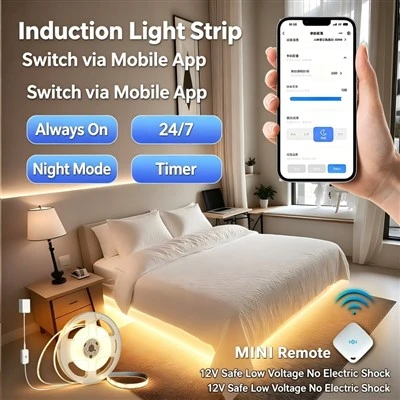
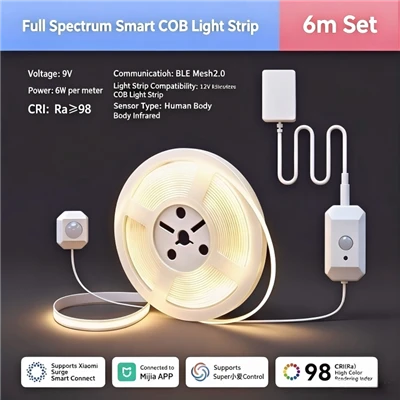
Smart LED Strips: Equipped with smart modules, they can be controlled via smartphone apps or voice assistants (e.g., Xiao Ai). Users can adjust brightness, color temperature (e.g., 2700K-6500K), and colors anytime, anywhere. They also support scheduled timers and automated scene linkages (e.g., turning on when motion is detected via sensors).
2. Lighting Effects and Dynamic Presentation
Traditional LED Strips: Standard RGB strips can only display one color across the entire length at a given time, mixing colors through red, green, and blue diodes, and cannot produce complex dynamic effects.
Smart LED Strips: High-end smart strips (e.g., addressable/digital RGB strips) feature built-in IC chips that support individual pixel or group control. This allows multiple colors to be displayed simultaneously on a single strip, creating dynamic animations like flowing water, chasing meteors, and scanning effects. They can even act as display screens to play videos and text.
3. Application Scenarios
Traditional LED Strips: Mostly used for basic decoration, simple lighting needs, or standard commercial signage where lighting effects are not a priority.
Smart LED Strips: Widely applied in high-end entertainment and personalized home environments, such as KTVs, gaming rooms, hotels, and exhibition halls. Through smart control, they create highly immersive and personalized atmospheres based on the environment (e.g., syncing with music rhythms or movie viewing modes).
4. Price and Cost
Traditional LED Strips: Due to mature technology and fierce market competition, traditional LED strips are relatively inexpensive with a low entry barrier.
Smart LED Strips: Because they integrate smart control chips, more complex driver systems, and support multiple protocols (e.g., Wi-Fi, Bluetooth, Zigbee, Matter), their initial purchase cost is higher, making them a relatively expensive product.
5. Controllers and Signal Transmission
Traditional LED Strips: Control current by adjusting resistance values. Output cables typically have 4 pins (RGB) or 5 pins (RGBW).
Smart LED Strips: Control current via digital signals, supporting protocols like SPI or DMX512. The controllers are more powerful but also more complex to operate, and controllers for the two types are generally not interchangeable.-