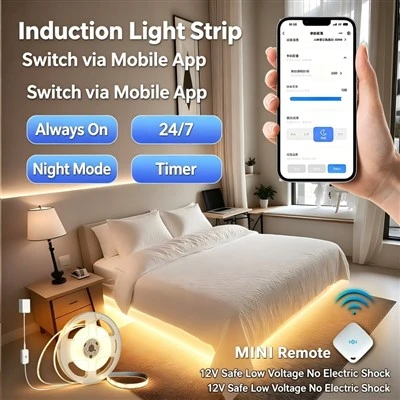
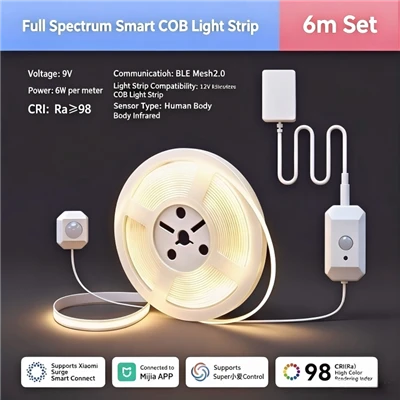
Smart LED strips can generally be cut to size by yourself, but strict guidelines must be followed, and the minimum controllable length after cutting depends on the specific type of strip.

1. Can smart LED strips be cut?
Yes, but you must do it correctly.
Look for the cut marks: Flexible LED strips can usually be cut to your desired length, but you should only cut along the designated "scissor marks" printed on the strip. Each scissor mark represents an independent circuit unit. Cutting in the wrong place or off the mark can cause the entire unit to fail or even damage the strip.
Disconnect the power: Always unplug the power supply before cutting to prevent short circuits or accidental electric shocks.
Irreversible process: Once the strip is cut, the removed section cannot be reattached and reused.
2. What is the minimum controllable length after cutting?
This mainly depends on the type of control chip used in the strip:
Addressable/Independent control strips (e.g., RGB-IC or RGBICW): These strips support independent zone control. For example, a common 5-meter strip with 50 independent color zones has a minimum controllable segment length of 10 cm (typically consisting of 3 LED beads).
Standard RGB strips: These strips can only display a single color across their entire length. Although they can be shortened by cutting at the designated marks, the concept of "zone control" does not apply to them.
Additional Notes
Brightness changes: If you cut off a portion of the strip, the remaining section might appear brighter than before. This is completely normal, as the reduced electrical load means each remaining LED bead may receive a slightly higher current.
Handling waterproof strips: If you are cutting a strip with waterproof epoxy coating or a silicone sleeve, you must pay special attention to the waterproofing and sealing of the connections. Always use an end cap and seal it with silicone glue to prevent water ingress and short circuits.